Wednesday, December 8, 2010

Introduction of Taiwan

Taiwan is discovered in the 16th century when Portuguese ships sailed to Southeast Asia. At that time, the sailors who aboard these ships were amazed by the island's natural beauty and hence they exclaimed "Ilha Formosa (beautiful island) in Portuguese. Ever since, the name has become synonymous with Taiwan.

It is located off the southeastern coast of China, at Pacific Ocean western edge, in-between Japan and Philippines. The Central Mountain Range divides the east and west coasts and stretches from north to south. In addition, a wonderful variety of geo-graphical contrasts such as the mountains, plateaus, plains and coastline which have a diversity of unique flora and fauna thrive.


Taiwan currently now enjoys a high level of openness and cultural diversity which results from playing an important role in the development of Asia as well as in world history, politics and trade.

Because of Taiwan's geographical and historical uniqueness, it has given rise to a diversity of ethnic groups, cultures, and languages. In total, there are 14 officially recognized indigenous tribes which have their own social structure, language, and cultural traditions. Moreover, Taiwan has also a population of 23 million people who still observe their culture and still speak regional Chinese dialects in addition to mandarin.

Cultures of Taiwan

Chinese Culture

Taiwan forms the center of Chinese arts and cultures which is not only from the collection of cultural relics from the past dynasties shown in the National Palace Museum but also be perfectly illustrated by the traditional architecture and folk arts found in Taiwan.

Temples and Architechture

The traditional architecture is an assembling of folk arts with refined decorations while forming a crucial part of the architecture, ranging from coloured paintings to calligraphic illustrations, wooden and stone carvings, clay sculptures and ceramics which they tell the story of Taiwan’s rich culture.

In addition, architectural features used Taiwan’s Chinese temples can also be seen. Some of these famous temples which are in historical and artistic values are the Longshan temple, Mazu temple and as well as the Chaotian temple.

Folk Art and Culture

Dajia Mazu Pilgrimage, the Goddess Mazu Making Rounds of Inspection and the Burning of the Plague God Boat are some of the important Taiwanese folk event celebrations. Taiwan has not only created its own Taiwanese opera which combines local opera and music into one performing art but also the glove puppet theatre with special effects added to its performances today, this thus leads to the great interest of the young Taiwanese.

Aboriginal Culture

The customs and traditions of the aborigines have given an extra dimension to the culture in Taiwan. The aboriginal tribes form the most northern branch of the Austronesia language group which ethically belongs to the Malay race where most of these tribes have been retreated into the mountains. In Taiwan, there are still 14 different tribes that have their own language, traditions and as well as tribal structure.


14 tribes are:
  • Amis
  • Atayal
  • Bunun
  • Kavalan
  • Paiwan
  • Pinuyumayan
  • Rukai
  • Saisiyat
  • Sakizaya
  • Sediq
  • Truku
  • Thao
  • Tsou
  • Yami

Traditions of Taiwan

Big Bowl Tea

This special type of tea is a way of brewing tea which origin by the tradition of the Hakka people of Miaoli in Taiwan and is also meant to show kindness to weary travelers passing by on foot which symbolize the generosity and hospitality, a simple gesture of respect and a willingness to help those in need.

The procedure of making the Big Bowl Tea is simply putting a few tea leaves in a large bowl of hot water whereby this kind of brewing tea method is associated with San Wan Township in Miaoli.

There is another method of making Big Bowl Tea where the rice husks spread on the surface of the brewed tea which was used to discourage travelers from hastily drinking the tea hence it acts as a reminder to the travelers slow down and breathe easily before rushing off again.

Wedding

Traditional activities practiced during wedding:

  • Presenting betrothal gifts

  • Sitting in a bridal sedan chair

  • Worshipping Heaven and Earth

  • Paying obeisance to parents and to each other

  • Presenting candies

  • Lighting cigarettes

  • Serving tea to collecting lucky money

  • Teasing the newlywed in the wedding night

  • Crying at wedding ( by Gaoshan nationality)

  • Marriage by kidnapping ( by Gaoshan nationally)

  • Carrying the bride on the groom’s back ( by Taromak people)

  • Swinging before marriage ( by Paiwan people)

  • Planting a pine tree at the wedding day ( by Saisiat people)

Ghost Month

This is a time whereby the Taiwanese are honoring the ancestors in which one way of doing that is to place food on a table outside homes so that the ancestors can have something to eat when they will visit their homes. On the other hand, businessmen will also make offerings in front of their businesses for good luck.

During this ghost month, the Taiwanese will be out in front of their homes burning money, paper clothing and other things for their ancestors because they believed that the smoke from the burning carries the essence of the money to the ancestors. In order to provide their ancestors with the things they once enjoyed on earth, burning of goods, fruit, food, even alcoholic beverages to the ancestors are all essential.


During pregnancy

During pregnancy, no construction work should be done in the house of the pregnant women and they should not attend funerals throughout the entire pregnancy. Also, they believed that in order to scare away evil spirits, the Taiwanese women may choose to sleep with knives under their bed.

Also, a month before the baby is due; the maternal grandmother will send tsue shen which is a package of clothing for her expectant daughter, where inside the package, there will be white cloth which is used to wrap the newborn. The maternal grandmother will wait for three days after the baby arrives before she visits the newborn bringing all her clothes and baby equipment.

In addition to the strain of labour, the mother will often drink a strong herbal potion. Once the baby is born they will often pray to the goddess who helped them conceive with an offering of sweet meats and incense.

Indigenous Groups of Taiwan

Amis

Population: 178,000
Location: Eastern valleys and coastal areas in Taiwan

The Amis is the largest indigenous group in Taiwan who are well-known vibrant singing and dancing celebrations of the Ilsin harvest festival is held during every summer months. Depending on the geographical region, the Amis is classified as belonging to the Nanshi, Xiuguluan, Coastal, Taitung, or Hengchun tribe.

Aayal

Population: More than 81,000
Location: Northern part of central Taiwan’s mountainous region

The tradition of Atayal facial tattooing was a key part of coming-to-age ceremonies. They are renowed for their weaving of colourful and intricate patterned fabrics. For the women, their skills in weaving can help to determine her social status, as for the males, they inherit their father’s first name as their last name.

Bunun

Population: Around 50,000
Location: Central and southeastern mountainous regions of Taiwan

The Bunun are the one who practice shifting cultivation and hunting. To ensure the success in hunting, the harvest-time ‘millet ceremony’ and major Bunun ceremonies such as the ‘ear-shooting ceremony’ will be held. Furthermore, the Bunun are very particularly noted for their pasibutbut polyharmonic choral singing of prayers.

Kavalan

Population: Around 1,200
Location: Eastern side of Taiwan

The kavalan is one of the Taiwan’s original plains groups where most of whuch have assimilated with the Hans who migrated to the plains in Hualien and Taitung in Taiwan. Although the Kavalan ceremonies have been influenced by the Amis, their distinctive language, myths, and shamanist practices remain constant.

Paiwan

Population:
Around 86,000
Location: Southern Central Mountain Range, Hengchun Peninsula, southeastern coastal region

The Ravar and Butsul tribes are the subgroups of Paiwan tribe who are well-known for their glazed beads, carving wood and stone skills and decorative motifits which made from hundred-pace snake totems.

Pinuyumayan

Population: 11,400
Location: Taitung

Zhiben and Nanwang are the two subgroups in this tribe which offer different dialects and customs. The Pinuymayan mean in modern times were known for their martial skills and valor, also traditional shamanistic religious practices are still around among the Pinuyumayan where their major role of the shaman is to interpret omens.

Rukai

Population: 11,700
Location: Pingtung, Kaohsiung, and Taitung

The Rukai traditionally had a hierarchy of nobility and commoners who the only highly regarded commoners are recognised as spiritually pure or brave had the honor of adorning themselves with lilies. In every August, the men will bake millet dough on heated stone slabs and divine the harvest in the coming year based on the appearance of the millet cakes in the harvest ceremony.

Saisiyat

Population: About 5,700
Location: Miaoli and Hsinchu

The Saisiyat is the tribe whereby they are well-known for their Pastaai ceremony which is conducted to commemorate the spirits of a short-statured, darker-skinned people who were the earliest inhabitants of Taiwan.

Legend about Saisiyat:
The jealous Saisiyat men killed virtually all of the men among the Short People who sexually harassed Saisiyat women. Hence, in order to propitiate the spirits of the Short People, ritual chanting and dancing are conducted for four consecutive nights.

Sediq

Population: Between 6,000 and 7,000
Location: Hualien and Nantou

The Sediq are well famous with their intricacy of weaving and embroidery by using ramie fiber, with traditional star-like and other geometric patterns against a white background. In the past, Sediq communities need to observe a Waya code of conduct, which included rules for every aspect of life such as the family affairs and religious ceremonies.

Thao

Population: 600-plus
Location: Sun Moon Lake

Once the Thao resides on lake’s edge of Sun Moon Lake, began to plant their crops on soil-bearing bamboo rafts on the lake which is also called the ‘floating island’. Unfortunately, the Thao’s language and culture has been strongly influenced by both Atayal and Bunun tribes.

Truku

Population: About 25,000
Location: Eastern coast in the Hualien and mountainous region of Nantou

In terms of language and customs, the Truku, Atayal and Sediq are closely related. Truku women in earlier times sported facial tattoos which Atayal women practiced the same tattoos after that whereas the sediq, the Truku have traditionally favored white clothing with embroidered trim.

Tsou

Population: About 6,600
Location: Chaiyi

The Tsou are divided into northern and southern subgroups with variations in dialect and customs. Homeyaya harvest ceremony and a taboo against hunting bears are the two cultural features in this tribe. The southern Tsou believe that their ancestral spirits reside in special mother-of-pearl beads which are stored by shamans away from public view and are taken out only when conducting religious ceremonies.

Yami

Population: Nearly 3,500
Location: Orchid Island off Taiwan’s southeastern coast

The Yami have developed a sea fishing culture which is unique among the indigenous peoples of Taiwan. A focus of Yami culture is the flying fish, which migrates annually through the waters off eastern Taiwan which the Yami depends in it for survival. Religious ceremonies are conducted during which prayers are intoned for an abundance of flying fish.


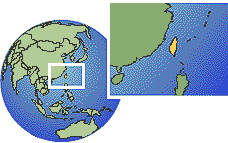
Languages used in Taiwan

Languages Spoken:

  • Taiwanese
  • Hakka
  • Mandarin
  • Indigenous languages

Written Language:

  • Chinese character

Mode of Education in Taiwan


Taiwanese students are required to take national exams before receiving post-secondary exams. Furthermore, it is compulsory for the students to take the Joint College Entrance Examination or other national exams in order to receive post-secondary education. If the students are to choose to continue their education after graduating from post-secondary education, the students can take the exams required to enter graduate school.

Leisure Programmes in Taiwan

Chinese New Year

Right from the start of mid-December, Taiwanese’s families have already started preparing for the annual Chinese New Year which creates an atmosphere of joy and renewal. Bidding farewell to the old year and thanking one’s ancestors and gods for their blessing and protection are the activities done during New Year’s Eve.

For children who have left their hometowns will return on New Year’s Eve to have dinner with their family members, in contrast, a table setting is placed to symbolize their presence for those who could not make the journey. After the dinner ends, the parents and older generation give red packets to the children which symbolized blessing of prosperity for their children.

With the arrival of the New Year’s Day, the Taiwanese begin the day by worshipping their ancestors, after which, they will start to make New Year’s visits to their friends and relatives with the display of dragon dancing, lion dancing and as well as other folk activities.


According to tradition, married women are to return to their natal home to visit her family on the second day of the new year; the gods return to the world of the living on the fourth day and as well as on the fifth day, new stores and old businesses started to open their doors for the first time in the new year due to auspiciousness of the day. The festive air of celebration will continue up till the Lantern Festival which falls on the fifteenth day of the New Year before it slowly went back to normal again.


Lantern Festival

It is known as Shang Yuan Festival in Taiwan falls on the fifteenth day of the first moon. Decorative lantern with a variety themes are carried by the children or adorn temples on the night of the festival. The Tainan Yanshui Fireworks and Taipei Pinghsi Sky Lanterns which are known together as the ‘Fireworks in the South, Sky Lanterns in the North’ are shown in the night sky on the day of the lantern festival.

Eating of tang yuan is also one of the traditional ways of celebrating the lantern festival other than displaying and appreciating lantern. It is an crucial custom which symbolize the family unity to the day’s festivities.


Dragon Boat Festival

It is celebrated on the fifth day of the fifth lunar month which begins as an occasion for driving off evil spirits and as well as for finding peace in one's life. A Dragon boat race which is an unbroken lively and colourful tradition for centuries is the activity held during the Dragon Boat Festival. Tzung tzu which was originally eaten in the memory of the patriot Chu Yuan is the most popular dish during the Dragon Boat Festival.

Customary practices for warding off evil and diseases:

  • Hanging calamus and moxa on the front door
  • Pasting up pictures of Chung Kuei
  • Adults drink hsiung huang wine
  • Children given fragrant sachets
  • ‘Fetching noon water’

‘Fetching noon water’ is a custom practiced in which people believe that by drawing water in the afternoon of the festival will cure illness.


Mid-Autumn Festival
This festival was originated from the ancient ceremony of Sacrificing to the Moon Goddess which was then combined with the legend of eating moon cakes. Today, Mid-Autumn Festival has already become a major occasion in Taiwan.


Mid-Autumn Festival is also considered as a time for family reunions where families will go together to scenic spots and parks for moon appreciation parties while eating moon cakes and pomelos and praying for a safe year in the night time.

This festival is also celebrated in Taiwan by making offerings to the Earth God by hoping he will make the next year's harvest even more bountiful.


Double Ninth Day

This festival is celebrated on the ninth day of the ninth lunar month. According to Chinese custom, "nine" is a number which belongs to the positive principle ‘yang’, hence, the day is also known as Chung Yang or "Double Yang" Festival. Double Nine Cakes are also eaten to symbolize luck during the festival

Activities originally practices to avoid disaster and danger:
  • Hill-climbing
  • Drinking chrysanthemum wine
  • Hanging dogwood sprays
  • Other customs

In Chinese, the word "nine" sounds like the word for "long time," and accordingly this number has became the representation of longevity. In 1966, the Ministry of Interior set Double Ninth Day as Senior Citizen’s Day where the week beginning on this holiday is observed as Senior Citizen's Week.

Unfortunately, because of that Double Ninth Day has lost its original purpose which becoming a time of expressing gratitude to the elderly for their hard work and continuing the Chinese tradition of revering the old today.


What is Taiwan Known for?

Taiwan is known for its high technology, friendliness, older cultures, and modern songs.

Tuesday, December 7, 2010

The “Disney” in Taiwan


Ximending(西门町)in Taiwan is the “Disney” which I have spotted.

“Disneyization is portrayed as a globalizing force. In other words, the principles with which it is associated are gradually spreading throughout the globe.”(Bryman, 2004). Hence, from what I have understood by this statement is that everything around the world have gradually becoming the same.

Ximending in Taiwan is a very famous shopping districts among the Taiwanese and as well as the people from many parts of the world where it famed for the diversity of entertainment and activities which can effective attracts young people and adults to visit. Not only in Taiwan, where we can locate such shopping districts, other countries such as Singapore, Japan, Korea and Hong Kong can also be found with famous shopping districts.

Nowadays, shopping has been one of the leisure activities for the women, hence, in order to cope with the demands of these women, a lot of countries have been building up more and more shopping centers in their countries and thus attracting tourists with their shopping districts.

Also, “theming” is one of the dimensions of Disneyization. Not only Ximending has became a famous shopping districts, just like in any other countries, their theme are becoming the same as well whereby they tend to promote their shopping districts to those young people and adults due to by knowing the spending power of these people have been increasing worldwide.

Another dimension of Disneyization is performative labour whereby it is there is a “growing tendency for frontline service work to be viewed as a performance, especially one in which the deliberate display of a certain mood is seen as part of the labour involved in service work” (Bryman, 2004). Of course, in shopping districts, there will be service staff servicing the customers in the retail shops.

In recent years, people from around the world has been comparing about the service standards of different countries. Ximending, as a famous shopping district will not be excluded in this evaluation.

Changes that have been brought about by the growth of tourism in Taiwan

One of the positive changes that have been brought about by the growth of tourism in Taiwan is the increase of tourist revenue, this is due to the money spent on local goods such as the accommodation, food and beverage outlets, retail shops has increased which in turn benefits the economy in Taiwan.

Not only that, some of the tourist who visited Taiwan may include foreign businessmen, hence when they see there are some good aspects in investing Taiwan hence they will have confidence in investing the country which helps the foreign investments to increase.
The growth of tourism also helps to create employment because without the employees who are the ones who satisfied the customers, there will not be customers anymore.

Another positive change is whereby there is a local awareness of the financial value of the natural and cultural sites and also the Taiwanese have learn that conserving the environment is important to them. Hence, in Taiwan, there are more and more heritage sites have been conserving by the government for the sake of cultural and heritage tourism.

In addition, the Taiwanese also can have the opportunities to know more about other countries’ culture when tourists visited Taiwan, this is beneficial to them as in they can reduce prejudice against other cultural and live in harmony with people around the world.

The loss of indigenous identity and values a negative change brought by the growth in tourism is the causing. There are in total 14 indigenous tribes in Taiwan, each has its own unique cultures and beliefs, hence when tourists come to Taiwan, they would tend to be interested in knowing more about them because as compared to them, their cultures and belief are totally different.

This thus causing the indigenous tribes to simplified their culture activities such as their traditional dance, to entertain the tourist. This is done so because, usually by presenting the real culture of them is quite difficult for the tourist to understand due to its complexity. As time passes when such entertainments are done for a long time, the ingenious cultures are slowly losing their authentic culture.