
Taiwan is discovered in the 16th century when Portuguese ships sailed to Southeast Asia. At that time, the sailors who aboard these ships were amazed by the island's natural beauty and hence they exclaimed "Ilha Formosa (beautiful island) in Portuguese. Ever since, the name has become synonymous with Taiwan.
It is located off the southeastern coast of China, at Pacific Ocean western edge, in-between Japan and Philippines. The Central Mountain Range divides the east and west coasts and stretches from north to south. In addition, a wonderful variety of geo-graphical contrasts such as the mountains, plateaus, plains and coastline which have a diversity of unique flora and fauna thrive.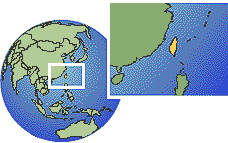
Taiwan currently now enjoys a high level of openness and cultural diversity which results from playing an important role in the development of Asia as well as in world history, politics and trade.
Because of Taiwan's geographical and historical uniqueness, it has given rise to a diversity of ethnic groups, cultures, and languages. In total, there are 14 officially recognized indigenous tribes which have their own social structure, language, and cultural traditions. Moreover, Taiwan has also a population of 23 million people who still observe their culture and still speak regional Chinese dialects in addition to mandarin.

No comments:
Post a Comment